

User Guide#
General Information#
Tips for Input
SparcleQC depends on a properly formatted PDB file. Make sure your PDB follows the standard format. SparcleQC does not require occupancy, temperature factor, segment identifier, or formal charge, but it does require all other columns.
CHARMM vs Amber
If using CHARMM, add the protein PDB’s path under the pdb_file keyword. A psf file (downloaded from CHARMM-GUI) should be in your working directory with the same name as the protein’s PDB but with the .psf extension. Separately add the ligand named “ligand.pdb” to your working directory. Futhermore, the path to the toplogy and parameter files for the chosen CHARMM forcefield should be specified using the keywords charmm_rtf and charmm_prm respectively.
If using Amber, the pdb_file path must point to a PDB with the complex (both the protein and ligand included).
On capping terminal residues
For CHARMM, capping of the terminal residues can be done through CHARMM-GUI before running SparcleQC. However, when using an Amber Forcefield, users have the option to have SparcleQC cap the terminal residues with ACE and NME where appropriate. If uploading a PDB with terminal residues already capped with NME and ACE, the following atom names should be used in columns 13-16: hydrogens in NME and ACE should be named H1, H2, and H, the carbon in NME should be named C. Additionally, the peptidic hydrogen (on the backbone nitrogen) of the terminal residues should be named H, not H1. In the SparcleQC input file, set pre-capped: true.
If uploading a PDB without endcaps on terminal residues, SparcleQC will automatically handle the tasks above.
Cutting and Capping Bonds
Alpha carbon - carbonyl carbon bonds are cut to separate the QM region from the MM region.
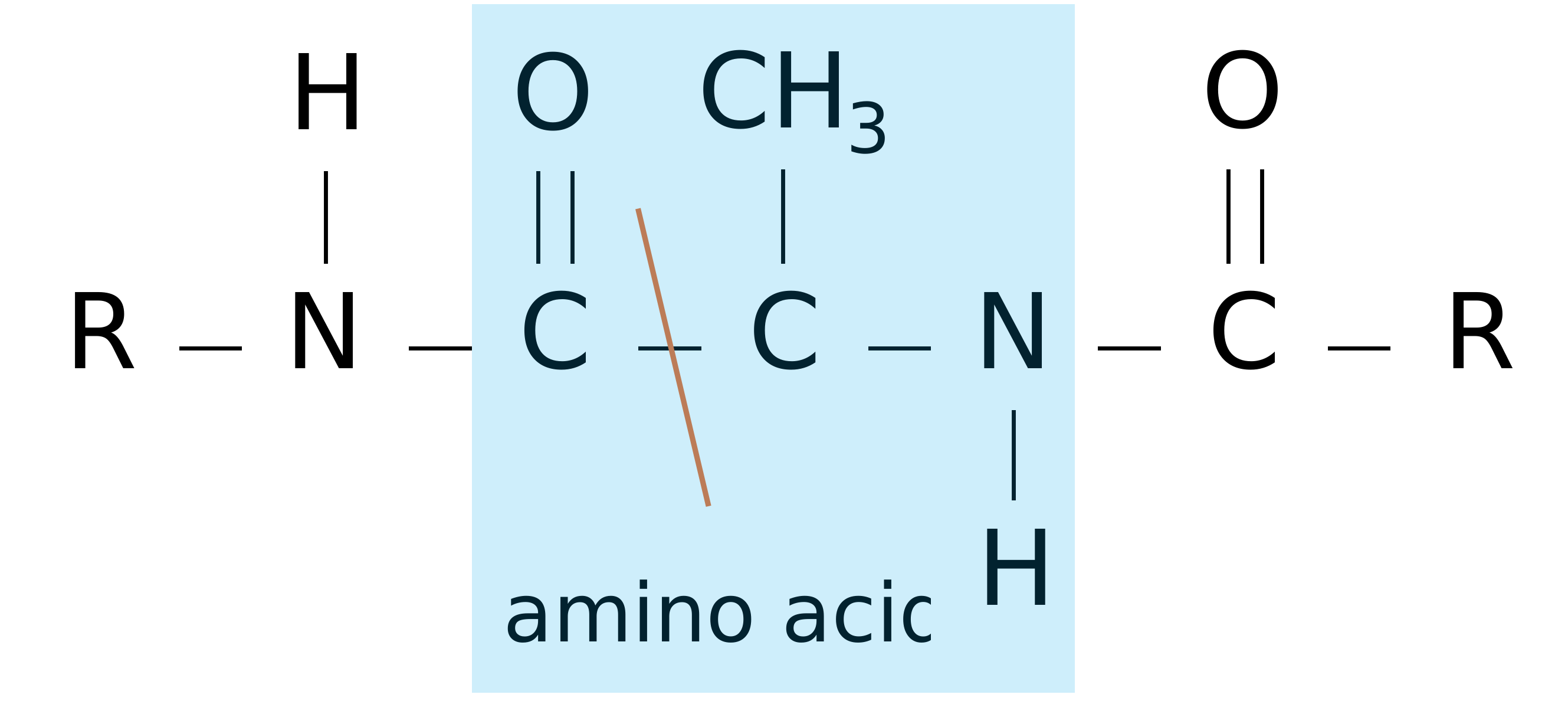
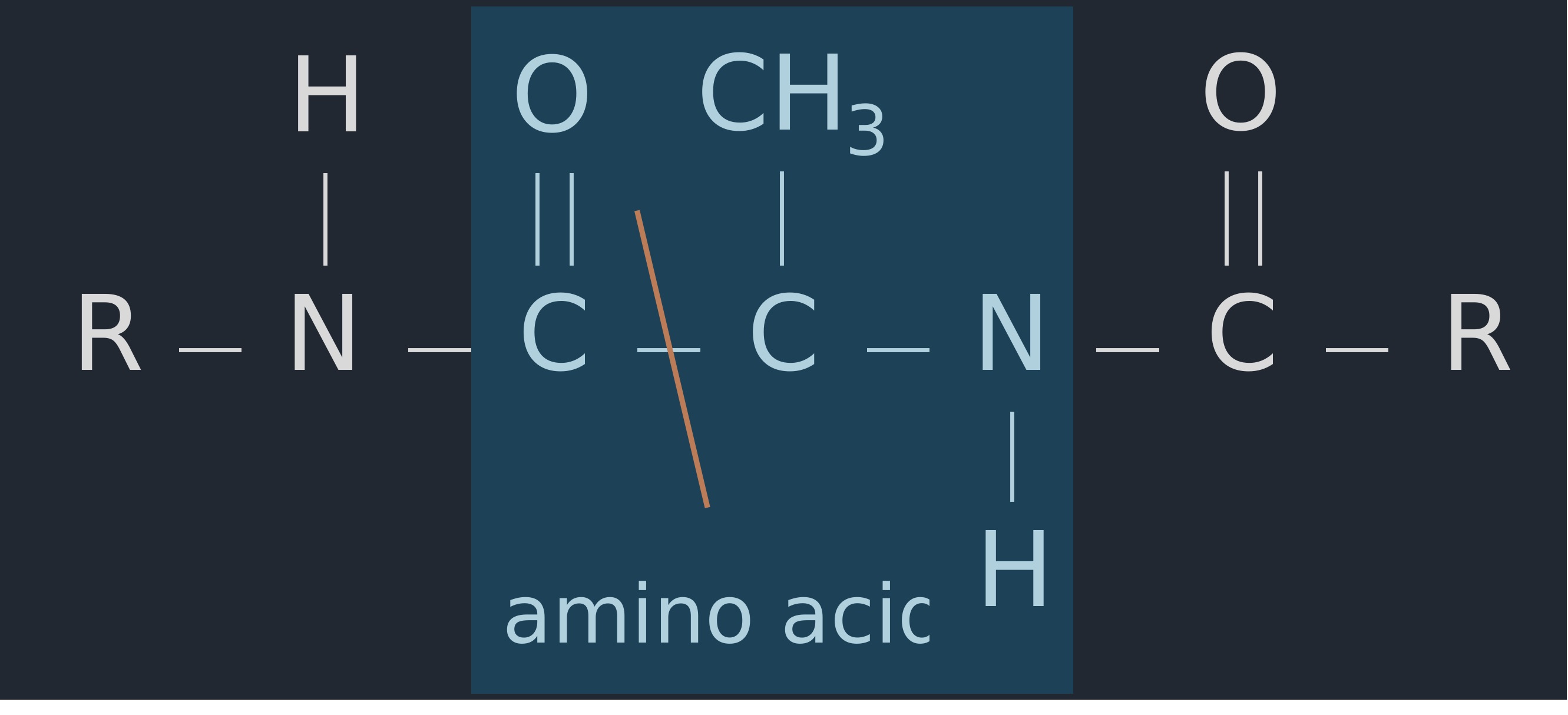
The valencies on the QM atoms of the cut bonds are satisfied by placing a hydrogen along the cut bond. The hydrogen bond length, \(r_{\rm{Q1-H1}}\), is determined by
where \(r_{\rm{Q1-M1}}\) is the bond length of the cut bond, \(r^{\rm{QM0}}_{\rm{Q1-M1}}\) is the corresponding bond length according to the force field used, and \(r^{\rm{QM0}}_{\rm{Q1-HL}}\) is the force field bond length for the hydrogen link bond. [1]
QM/MM Boundary Charges
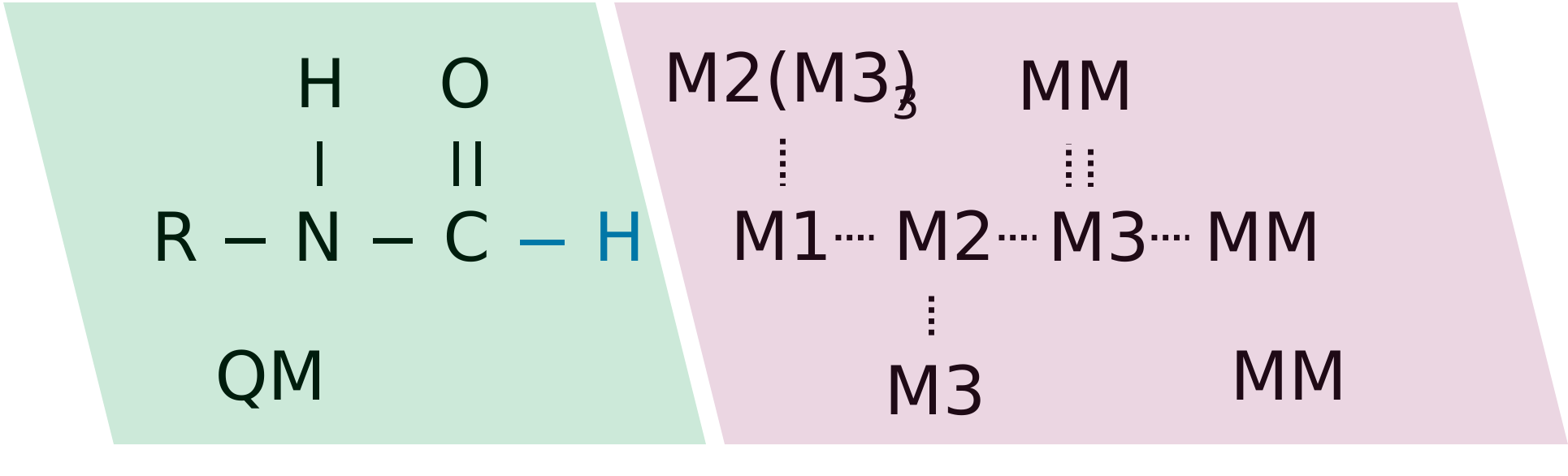
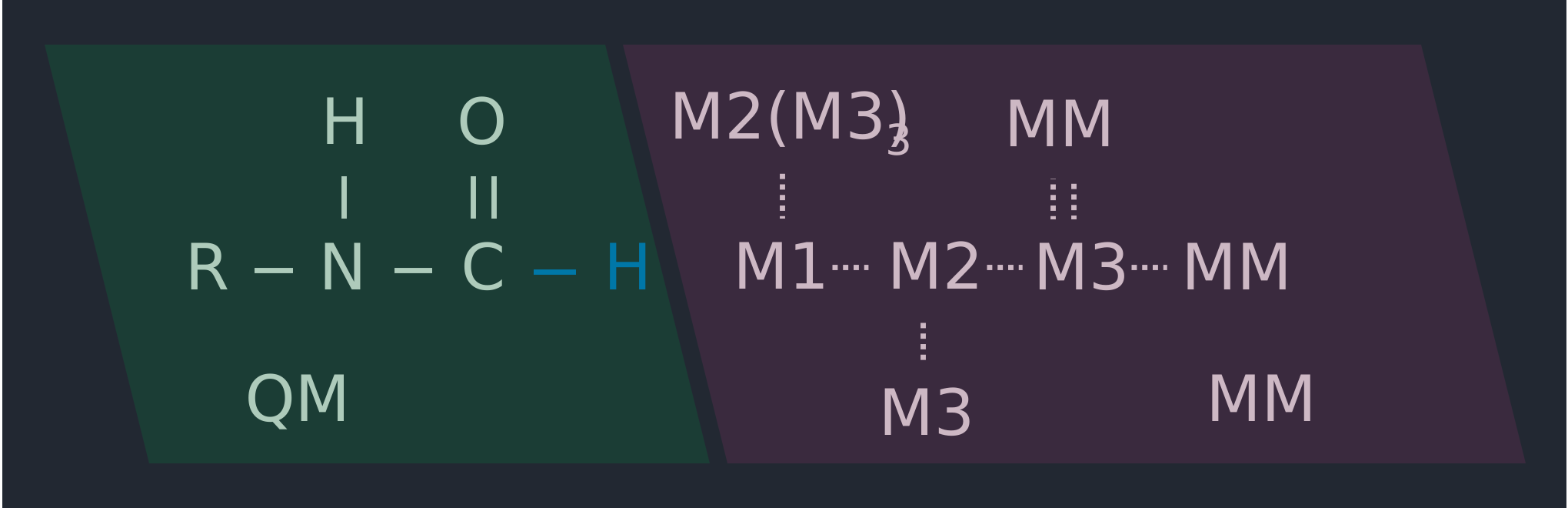
Point charges too close to the capped QM region may cause overpolarization. Users have the option of choosing one of nine charge schemes to alter charges at this boundary. These schemes are:
Z1: Charges of the M1 atoms are set to zero.
Z2: Charges of the M1 and M2 atoms are set to zero.
Z3: Charges of the M1, M2, and M3 atoms are set to zero.
DZ1: At each cut, the charge of M1 is set to zero, and the charge needed to return the MM boundary residue to its original integer charge is evenly distributed to all MM atoms in that residue.
DZ2: At each cut, the charges of M1 and M2 atoms are set to zero, and the charge needed to return the MM boundary residue to its original integer charge is evenly distributed to all MM atoms in that residue.
DZ3: At each cut, the charges of M1, M2, and M3 atoms are set to zero, and the charge needed to return the MM boundary residue to its original integer charge is evenly distributed to all MM atoms in that residue.
BRC: At each cut, the charge of M1 is set to zero, and the charge needed to return the MM boundary residue to its original integer charge is evenly distributed to the midpoints of the M1-M2 bonds.
BRCD: At each cut, the charge of M1 is set to zero, and the charge needed to return the MM boundary residue to its original integer charge is evenly distributed to the midpoints of the M1-M2 bonds, but doubled. This charge is also subtracted from each M2 atom within the residue.
BRC2: At each cut, the charge of M1 is set to zero, and the charge needed to return the MM boundary residue to its original integer charge is evenly distributed to the M2 atoms in that residue.
For SAPT0 in Psi4, we recommend BRC. [2]
Resulting Input File for QM Calculation
The result of running SparcleQC is an input file for either Psi4, Q-Chem, or NWChem. In general, the input file will look similar to the files below.
"""
This Psi4 file was created using Sparcle-QC with the following specifications:
pdb_file: 2cji.pdb
cutoff: 5
...
... # copy of SparcleQC input file
"""

import psi4
import numpy as np
import qcelemental as qcel
import time

start = time.time()

psi4.set_memory('60 GB')
psi4.core.set_num_threads(2)

psi4.core.set_output_file('psi4_file.out', False)
dimer = psi4.geometry('''
0 1
 N -17.183 -79.238 -85.266
 C -13.352 -80.694 -86.001
 O -17.152 -80.421 -85.511
 H -14.073 -80.711 -88.421
 H -12.998 -81.949 -89.060
 H -8.563 -81.173 -79.793
 H -7.409 -80.135 -79.552
--
1 1
 C -17.273 -84.206 -80.622
 O -16.663 -84.413 -79.570
 C -16.682 -81.881 -81.407
 C -16.314 -82.218 -82.856
 C -17.017 -80.384 -81.352
 H -18.036 -81.829 -79.079
 H -18.516 -82.920 -81.796
 H -15.811 -82.046 -80.774
 H -15.543 -81.535 -83.213
 H -15.939 -83.235 -82.932
 H -17.198 -82.118 -83.486
units angstrom
symmetry c1
no_com
no_reorient
''')

Chargefield_B = np.array([
0.5972,-25.097,-92.541,-80.98
,-0.5679,-26.081,-91.792,-81.032
,-0.3662,-24.383,-92.801,-79.671
,0.1123,-25.065,-93.243,-78.959
,0.1123,-23.555,-93.476,-79.829
,0.1123,-24.006,-91.874,-79.266]).reshape((-1,4))
Chargefield_B[:,[1,2,3]] /= qcel.constants.bohr2angstroms

psi4.set_options({
'basis': 'aug-cc-pv(D+d)z',
'freeze_core':'true',
'scf_type':'df'
})

e = psi4.energy('sapt0', external_potentials={'B':Chargefield_B})

end=time.time()
wall_time = '{:.2f}'.format(float(end-start))
with open ('psi4_file.out', 'a') as output:
    output.write(f'Wall time: {wall_time} seconds')
"""
This Q-Chem file was created using Sparcle-QC with the following specifications:
pdb_file: 2cji.pdb
cutoff: 5
...
... # copy of SparcleQC input file
"""

$molcule
4 1
 N -17.183 -79.238 -85.266
 C -13.352 -80.694 -86.001
 O -17.152 -80.421 -85.511
 H -14.073 -80.711 -88.421
 H -12.998 -81.949 -89.060
 H -8.563 -81.173 -79.793
 H -7.409 -80.135 -79.552
 C -17.408 -77.515 -77.251
 O -16.597 -76.592 -77.177
 N -18.231 -77.603 -78.308
 C -18.398 -76.535 -79.306
 C -19.485 -75.554 -78.882
 O -20.421 -75.955 -78.193
 H -18.875 -78.381 -78.368
 H -17.467 -75.980 -79.429
 H -18.673 -76.965 -80.270
 N -19.491 -74.326 -79.419
$end

$external_charges
    -25.097    -92.541    -80.98    0.5972
    -26.081    -91.792    -81.032    -0.5679
    -24.383    -92.801    -79.671    -0.3662
    -25.065    -93.243    -78.959    0.1123
    -23.555    -93.476    -79.829    0.1123
    -24.006    -91.874    -79.266    0.1123
$end

$rem
METHOD hf
BASIS 6-31g*
JOBTYPE sp
$end
"""
This NWChem file was created using Sparcle-QC with the following specifications:
pdb_file: 2cji.pdb
...
... # copy of SparcleQC input file
"""

START
SCRATCH_DIR /scratch/user/
PERMANENT_DIR /scratch/user/
MEMORY 32 GB

geometry nocenter noautoz noautosym
4 1
 N -17.183 -79.238 -85.266
 C -13.352 -80.694 -86.001
 O -17.152 -80.421 -85.511
 H -14.073 -80.711 -88.421
 H -12.998 -81.949 -89.060
 H -8.563 -81.173 -79.793
 H -7.409 -80.135 -79.552
 C -17.408 -77.515 -77.251
 O -16.597 -76.592 -77.177
 N -18.231 -77.603 -78.308
 C -18.398 -76.535 -79.306
 C -19.485 -75.554 -78.882
 O -20.421 -75.955 -78.193
 H -18.875 -78.381 -78.368
 H -17.467 -75.980 -79.429
 H -18.673 -76.965 -80.270
 N -19.491 -74.326 -79.419
end

bq
    -25.097    -92.541    -80.98    0.5972
    -26.081    -91.792    -81.032    -0.5679
    -24.383    -92.801    -79.671    -0.3662
    -25.065    -93.243    -78.959    0.1123
    -23.555    -93.476    -79.829    0.1123
    -24.006    -91.874    -79.266    0.1123
end

basis
* library cc-pvdz
end

task hf energy
Options#
Required
Keyword |
Description |
Option Type |
pdb_file |
PDB filename of complex (if using Amber) or protein (if using CHARMM) |
string |
cutoff |
distance from seed; where cutting of protein begins |
float > 0 |
seed |
starting point for QM region expansion; either the whole ligand (‘ligand’) or an atom within the ligand (given by the atom ID). If an atom ID is given, ‘seed_file’ is required. See other options. |
|
ligand_charge |
charge of ligand |
integer |
software |
Software package for generated input files. Choose psi4, nwchem, or q-chem. |
string |
charge_scheme |
Scheme for handling charges at the QM/MM boundary. Choose Z1, Z2, Z3, DZ1, DZ2, DZ3, BRC, BRC2, or BRCD. |
string |
method |
QM method for treatment of the QM region. Ex: hf or b3lyp or sapt0 |
string |
basis_set |
Basis set for treatment of QM region. Ex: aug-cc-pvdz or 6-31G* |
string |
Force Fields
Keyword |
Description |
Option Type |
Required if using |
amber_ff |
Amber forcefield for point charges (ex. ff19SB) |
string |
Amber |
charmm_rtf |
Path to CHARMM .rtf file of desired CHARM force field |
string |
CHARMM |
charmm_prm |
Path to CHARMM .prm file of desired CHARMM force field |
string |
CHARMM |
water_model |
Desired water model (ex. TIP3P or OPC) |
string |
Amber or CHARMM |
o_charge |
Custom oxygen charge for water, optional |
float |
|
h_charge |
Custom hydrogen charge for water, optional |
float |
|
ep_charge |
Custom extra point charge for water, optional. If extra point charge is given, set water_model to a four-point water model for generation of extra point charge coordinates. |
float |
|
other_amber_ff |
List of other (non-protein, non-water) Amber FFs to be used. (ex. ‘leaprc.DNA.OL15’, ‘leaprc.gaff2’) |
list |
Amber |
Psi4
Keyword |
Description |
Option Type |
Default |
fisapt_partition |
Generate fA.dat and fB.dat files for FSAPT partition? true or false |
string |
false |
do_fsapt |
Run functional-group SAPT? true or false |
string |
None |
psi4_options |
dictionary of extra Psi4 options (ex. {‘e_convergence’:9}) |
dictionary |
{} |
nthreads |
number of threads to be used by Psi4, if set in the input file |
integer |
1 |
mem |
String for memory setting, including units |
string |
32 GB |
Q-Chem
Keyword |
Description |
Option Type |
Default |
qchem_options |
dictionary of options to add to $rem block, optional. Note: method and basis are added to $rem block by default. |
dictionary |
{‘JOBTYPE’:’xsapt’} if sapt in method; or {‘JOBTYPE’:’sp’} |
qchem_sapt |
dictionary of options to include in $sapt block, optional |
dictionary |
{}, or if method is sapt0: {‘algorithm’:’ri-mo’,’basis’:’dimer’} |
NWChem
Keyword |
Description |
Option Type |
Default |
nwchem_scratch |
path/to/scratch for SCRATCH_DIR |
string |
None |
nwchem_perm |
path/to/perm for PERMANENT_DIR |
string |
None |
nwchem_scf |
dictionary of options to add to SCF block |
dictionary |
None |
nwchem_dft |
dictionary of options to add to DFT block |
dictionary |
{‘xc’:’b3lyp’} |
mem |
String for memory setting, including units |
string |
32 GB |
Other
Keyword |
Description |
Option Type |
Default |
pre-capped |
If protein termini are already capped, set to true. Otherwise, Sparcle_QC will add endcaps. |
string |
false |
seed_file |
If atom id is specified as ‘seed’, add filename to corresponding atom and atom id. Can be the same as pdb_file or different. |
string |
|
template_path |
If you would like to cut a QM region from a new PDB that matches the QM region of an existing PDB, set this to the path of the ‘cx_autocap_fixed.pdb’ in the subdirectory of the existing PDB’s Sparcle_QC run. |
string |
|
cp |
Add ghost atoms for counterpoise correction? true or false |
string |
true |
Example Inputs#
F-SAPT with Psi4 and Amber
The following input file will create an F-SAPT file for the protein:ligand complex to be run with Psi4. It will also create the functional group partitions needed for post-processing, fA.dat and fB.dat.
pdb_file: 2cji.pdb
pre-capped: true
cutoff: 5
seed: ligand
charge_scheme: BRC
ligand_charge: 0
method: fisapt0
fisapt_partition: true
basis_set: aug-cc-pv(D+d)z
amber_ff: ff19SB
water_model: opc
o_charge: 0
h_charge: 0.6791
ep_charge: -1.3582
software: psi4
mem: 60 GB
nthreads: 10
B3LYP with Q-Chem and CHARMM
The following input file will create prepare 3 Q-Chem files: one with the ligand (fully QM), one with the protein (QM/MM), and one with the complex (QM/MM). These could be used to calculate a supermolecular interaction energy. We will turn on counterpoise correction, which will include ghost atoms for the QM dimer in all three files.
pdb_file: 3qxp.pdb
cutoff: 5
seed: ligand
charge_scheme: DZ3
ligand_charge: 0
method: b3lyp
basis_set: 6-31G*
charmm_rtf: top_all36_prot.rtf
charmm_prm: par_all36m_prot.prm
water_model: tip3p
software: q-chem
HF with NWChem and Amber
The following input file will create prepare 3 NWChem files: one with the ligand (fully QM), one with the protein (QM/MM), and one with the complex (QM/MM). These could be used to calculate a supermolecular interaction energy. We will turn on counterpoise correction, which will include ghost atoms for the QM dimer in all three files. The QM region will grow starting from a single ligand atom.
pdb_file: 2cji.pdb
pre-capped: true
cutoff: 8.5
seed: 4247
seed_file: 4yff.pdb
charge_scheme: BRC
ligand_charge: 0
method: hf
basis_set: aug-cc-pv(D+d)z
amber_ff: ff19SB
water_model: opc
o_charge: 0
h_charge: 0.6791
ep_charge: -1.3582
software: nwchem
nwchem_scratch: /scratch/user
nwchem_perm: /scratch/user
mem: 60 GB
Templating a QM Region for Congeneric Ligands
Studies that compare a protein with two similar ligand structures may choose to equilibrate protein structures for each ligand. In this case, the two PDBs may be similar in structure, but not identical, and their coordinates likely will not match. Here, we show the steps of (1) creating a SAPT input file for one ligand (named methyl), then (2) using the QM region of ‘methyl’ as a template for cutting the QM region of the other ligand, named ‘chlorine’.
Step 1, the following is ‘methyl.in’:
pdb_file: 2cji_methyl.pdb
pre-capped: true
cutoff: 5
seed: ligand
charge_scheme: BRC
ligand_charge: 0
method: fisapt0
basis_set: aug-cc-pv(D+d)z
amber_ff: ff19SB
water_model: opc
o_charge: 0
h_charge: 0.6791
ep_charge: -1.3582
software: psi4
mem: 60 GB
nthreads: 10
Step 2, the following is ‘chlorine.in’:
pdb_file: 2cji_chlorine.pdb
pre-capped: true
template_path: methyl/cx_autocap_fixed.pdb
charge_scheme: BRC
ligand_charge: 0
method: fisapt0
basis_set: aug-cc-pv(D+d)z
amber_ff: ff19SB
water_model: opc
o_charge: 0
h_charge: 0.6791
ep_charge: -1.3582
software: psi4
mem: 60 GB
nthreads: 10
With the two SAPT files, a relative interaction energy can be computed, giving insight into which ligand is more stable within the protein pocket.
Convergence Study with Increasing QM Region Size via API
A Python loop can be used to generate multiple input files with an increasing size of the QM region. We can increase the size of the QM region by incrementing the cutoff. An example Python script is below.
import sparcleqc

inputs = {
    'pdb_file': '2cji.pdb',
    'pre-capped': 'True',
    'seed': 'ligand',
    'charge_scheme': 'BRC',
    'ligand_charge': 0,
    'method': 'fisapt0',
    'basis_set': 'aug-cc-pv(D+d)z',
    'amber_ff': 'ff19SB',
    'water_model': 'opc' ,
    'o_charge': 0,
    'h_charge': 0.6791,
    'ep_charge': -1.3582,
    'software': 'psi4',
    'mem': '60 GB',
    'nthreads': 10}

cutoffs = [3, 4, 5]

for c in cutoffs:
    inputs['cutoff'] = f'{c}'
    inputs['input_filename'] = f'cutoff_{c}.in'
    print(inputs)
    sparcleqc.run_sparcle(user_options = inputs)